
Chiropractic Care · November 9, 2026

Neck pain has a way of making everything harder — turning your head to check traffic, sleeping comfortably, even just sitting at your desk without wincing. If you’ve been dealing with persistent stiffness, aching, or sharp pain in your neck, you’re definitely not alone. Here in Fredericksburg, VA, neck pain is one of the most common complaints that brings patients through the doors at Wilderness Family Chiropractic. The good news is that there are safe, natural, non-invasive options that can help — and chiropractic care is one of the most well-researched conservative approaches available today. This article will walk you through what neck pain really is, why it happens, and how chiropractic adjustments may offer meaningful, lasting relief.
What Are Chiropractic Adjustments for Neck Pain?
Chiropractic adjustments for neck pain — sometimes called cervical manipulation — involve a chiropractor applying controlled, targeted force to the joints of the cervical spine (the neck region). The goal is to restore proper joint movement, reduce muscle tension, and support the nervous system’s ability to function without interference. It is a non-surgical, drug-free approach that has been used for well over a century as part of conservative musculoskeletal care.
- What Causes Neck Pain?
- Signs and Symptoms Worth Paying Attention To
- How Chiropractic Adjustments Help With Neck Pain
- What to Expect at Wilderness Family Chiropractic
- Practical Tips for Supporting Your Neck Health
- When to See a Chiropractor for Neck Pain
- Chiropractic vs. Common Neck Pain Approaches
- Myths vs. Facts About Chiropractic and Neck Pain
- Final Thoughts From Our Fredericksburg Team
What Causes Neck Pain?
The neck — or cervical spine — is a remarkable structure. It supports the weight of your head (which typically weighs between 10 and 12 pounds), allows for a wide range of motion, and protects the delicate nerves that run from your brain down through your body. That combination of mobility and responsibility makes it vulnerable to strain and dysfunction.
One of the most common culprits today is what many practitioners call “tech neck” — the forward head posture that develops when we spend hours looking down at phones or hunching toward computer screens. For every inch your head moves forward from its natural position, the effective weight it places on your cervical spine increases significantly. Over time, this places enormous strain on the muscles, discs, and joints of the neck.
Beyond posture, neck pain can be triggered by a range of factors. Muscle strain from sleeping in an awkward position, whiplash from a car accident, joint degeneration related to age or wear, herniated cervical discs, and even chronic stress (which causes us to unconsciously tighten the muscles of the neck and shoulders) are all common contributors. In Fredericksburg and the surrounding communities, Dr. Christine Stewart at Wilderness Family Chiropractic regularly sees patients whose neck pain stems from a combination of these factors rather than a single isolated cause — which is why a thorough evaluation is so important before beginning care.
Signs and Symptoms Worth Paying Attention To
Neck pain doesn’t always look the same from person to person. For some, it’s a dull, persistent ache that settles in between the shoulder blades and the base of the skull. For others, it’s a sharp, shooting sensation that travels down one arm. Some people experience headaches that originate at the base of the skull and radiate forward — these are known as cervicogenic headaches, and they’re closely connected to dysfunction in the cervical spine.
Stiffness that limits how far you can rotate or tilt your head is another telltale sign. You might also notice a grinding or clicking sensation when you turn your neck, tingling or numbness in your hands or fingers, or persistent muscle tightness across the tops of your shoulders. These symptoms suggest that the joints and soft tissues of the cervical spine are not moving and communicating the way they should be.
It’s important not to dismiss mild or moderate neck pain as something you simply have to live with. When left unaddressed, cervical dysfunction can worsen over time, potentially leading to more complex problems down the road. If any of these symptoms resonate with you, reaching out to a qualified chiropractor near you is a reasonable and proactive first step.
How Chiropractic Adjustments Help With Neck Pain
Chiropractic care for neck pain is rooted in a straightforward principle: when the joints of the spine are restricted or misaligned — a state chiropractors call a “subluxation” — it can lead to pain, inflammation, muscle tension, and nerve interference. By restoring proper motion to those joints through precise, controlled adjustments, the body is better positioned to heal itself naturally.
When Dr. Christine Stewart performs a cervical adjustment at Wilderness Family Chiropractic, she applies a carefully directed force to a specific joint in the neck. This motion helps restore normal joint mechanics, reduce local inflammation, ease surrounding muscle tension, and improve the flow of communication along the nervous system. Many patients notice a reduction in pain and an improvement in range of motion even after their first few visits — though results vary depending on the nature and duration of the problem.
Research from organizations like the American College of Physicians (ACP) has suggested that spinal manipulation is a reasonable first-line option for certain types of neck and back pain. The National Center for Complementary and Integrative Health (NCCIH), a division of the NIH, acknowledges that spinal manipulation may help reduce pain and improve function in people with acute and chronic neck pain. Evidence also indicates that chiropractic care combined with rehabilitative exercise may produce better outcomes than either approach alone.
Beyond adjustments themselves, chiropractic care at Wilderness Family Chiropractic often includes soft tissue work to address muscle tension, posture correction guidance, and ergonomic recommendations tailored to your daily life — all of which work together to support long-term neck health rather than just masking pain temporarily.
What to Expect at Wilderness Family Chiropractic
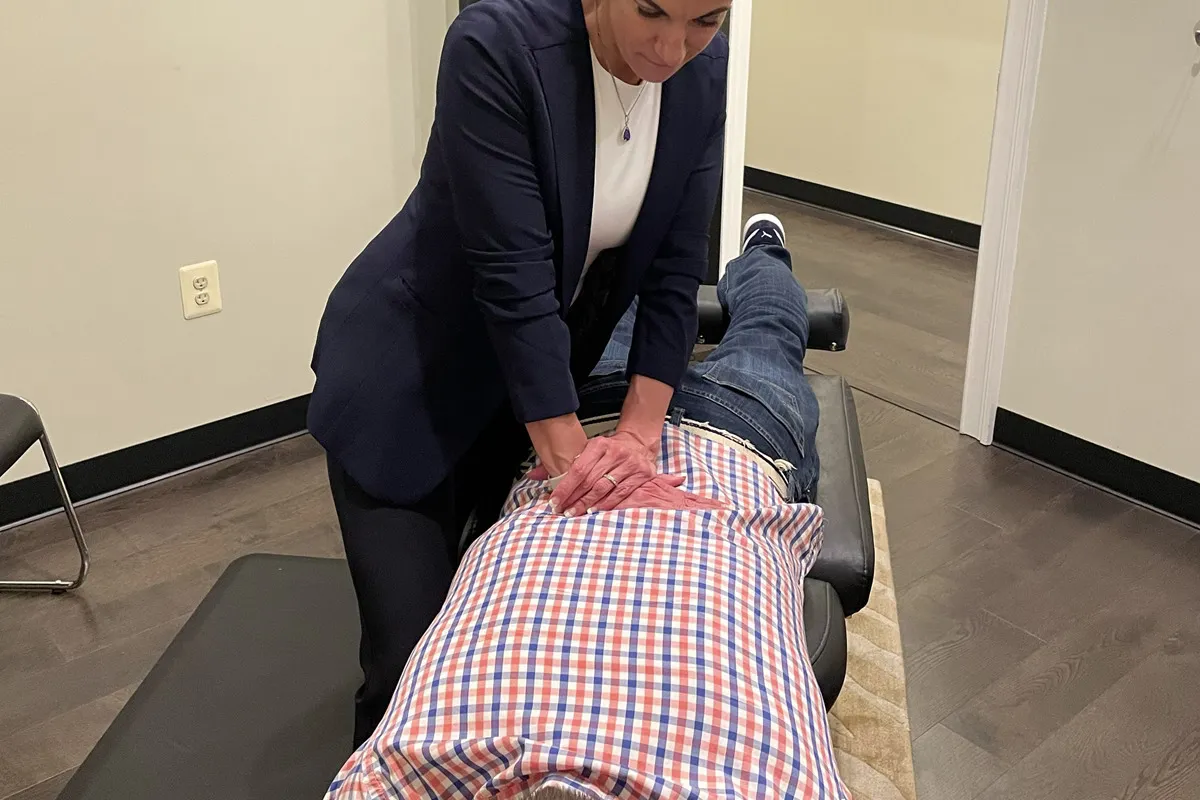
If you’re new to chiropractic care, it’s completely natural to have questions or feel a little uncertain about what the experience will be like. At Wilderness Family Chiropractic in Fredericksburg, VA, the process starts with a thorough consultation and examination. Dr. Christine Stewart takes the time to understand your history, your symptoms, and your goals before recommending any form of care.
The initial evaluation typically includes a postural assessment, range-of-motion testing, and orthopedic or neurological screening as appropriate. If imaging is needed, digital x-rays can be taken on site. This careful, individualized approach ensures that care is tailored to your specific situation — not a generic template.
Chiropractic adjustments themselves are generally gentle and well-tolerated. You may hear a popping sound during a cervical adjustment — that’s simply gas being released from the joint space, similar to cracking your knuckles. Most patients report feeling a sense of relief or relaxation immediately after treatment, though some mild soreness in the first day or two is normal, particularly if muscles have been tight for a long time.
Practical Tips for Supporting Your Neck Health
Chiropractic care works best when it’s supported by healthy daily habits. Here are some practical, evidence-informed ways to protect and support your cervical spine between visits to Wilderness Family Chiropractic.
Mind your screen position. Whether you’re working at a desktop, using a laptop, or scrolling on your phone, try to bring screens up to eye level as much as possible. This reduces the forward head posture that places so much strain on the neck. Even small adjustments — like propping your phone up instead of holding it in your lap — can make a meaningful difference over time.
Take regular movement breaks. If you work at a desk, aim to get up and move every 30 to 45 minutes. Gentle neck rolls, chin tucks, and shoulder blade squeezes can help counteract the tension that builds during long periods of sitting. Movement is medicine for the spine.
Evaluate your sleep setup. Your pillow should support the natural curve of your neck without pushing your head too far forward or letting it drop to the side. Sleeping on your back or side is generally more neck-friendly than stomach sleeping, which forces your head into rotation for extended periods.
Manage stress intentionally. Emotional and psychological stress commonly manifests as physical tension in the neck and shoulders. Deep breathing, mindfulness practices, gentle movement, and adequate sleep all help regulate the body’s stress response — and your neck muscles will thank you for it.
When to See a Chiropractor for Neck Pain
Many people wait far too long before seeking care for neck pain, assuming it will resolve on its own. While minor muscle soreness from an awkward sleeping position often does improve within a few days, persistent or recurring neck pain is worth having evaluated by a professional.
Consider scheduling an appointment with Dr. Christine Stewart at Wilderness Family Chiropractic if your neck pain has lasted more than a week or two, if it keeps coming back, if it’s limiting your daily activities, or if you’re noticing symptoms like headaches, radiating arm pain, or tingling in your fingers alongside the neck pain.
There are also situations where neck pain warrants urgent medical attention rather than chiropractic care. If you experience neck pain following a significant trauma such as a fall or high-impact accident, or if you notice sudden weakness in your arms or legs, difficulty walking, problems with bladder or bowel control, or severe headache described as “the worst of your life,” please seek emergency medical care immediately. These can be signs of a more serious condition that requires prompt diagnosis. A good chiropractor will always be honest with you about when referral to another provider is the right call — and at Wilderness Family Chiropractic, that commitment to your overall health always comes first.
Chiropractic vs. Common Neck Pain Approaches
| Approach | Mechanism | Key Benefit | Considerations |
|---|---|---|---|
| Chiropractic Adjustments | Restores joint motion, reduces nerve interference, eases muscle tension | Non-invasive, drug-free, addresses root cause of dysfunction | May require multiple visits; most effective with lifestyle support |
| Over-the-Counter Pain Medication | Temporarily reduces pain and inflammation chemically | Quick, accessible relief for mild symptoms | Does not address underlying joint or muscle dysfunction; potential side effects with long-term use |
| Physical Therapy | Strengthening, stretching, and rehabilitative exercise | Builds muscular support around the cervical spine | Works well in combination with chiropractic care |
| Prescription Medications / Injections | Stronger chemical pain management or nerve block | Useful for severe or nerve-related pain | Typically not a first-line option for mechanical neck pain; side effects possible |
| Surgery | Structural repair of discs, nerves, or vertebrae | Appropriate for certain severe structural conditions | Invasive; conservative care is typically recommended first |
Myths vs. Facts About Chiropractic and Neck Pain
Myth: Chiropractic adjustments are dangerous for the neck.
Fact: Cervical chiropractic adjustments have a strong safety record when performed by a licensed, trained chiropractor. Serious adverse events are considered rare. As with any form of healthcare, a thorough evaluation is conducted beforehand to identify whether adjustments are appropriate for each individual patient.
Myth: Once you start chiropractic care, you have to go forever.
Fact: The length of a care plan is always individualized and transparent. Some patients choose to continue with periodic wellness visits after their initial complaint resolves because they find value in preventive care — but that is always a personal choice, never a requirement. Dr. Christine Stewart at Wilderness Family Chiropractic believes in empowering patients, not creating dependency.
Myth: The popping sound during an adjustment means something is being “cracked.”
Fact: The sound you sometimes hear during a chiropractic adjustment is called a cavitation. It’s caused by a rapid change in pressure within the joint space, which causes dissolved gases to briefly form bubbles. Nothing is being cracked, broken, or damaged — it’s a completely normal physiological event.
Myth: Neck pain will go away on its own, so there’s no reason to seek care.
Fact: While some mild neck pain does resolve without treatment, recurring or persistent pain is often a signal that the underlying mechanical issue hasn’t been addressed. Ignoring it can allow dysfunction to become chronic and more difficult to treat over time.
Myth: Chiropractic care is only for back pain.
Fact: While chiropractic care is well known for addressing low back pain, it is equally applicable to the cervical spine. Many patients seek chiropractic specifically for neck pain, cervicogenic headaches, and related upper body discomfort — and research supports its use in these areas.
Final Thoughts From Our Fredericksburg Team
Living with neck pain doesn’t have to be your normal. Whether your pain is the result of years of desk work, a recent injury, or the slow creep of postural habits that have built up over time, there is real hope — and practical, evidence-informed help available without surgery or medication as a starting point.
At Wilderness Family Chiropractic in Fredericksburg, VA, Dr. Christine Stewart is passionate about helping the members of this community move better, feel better, and understand their own bodies more deeply. The goal isn’t just to get you out of pain — it’s to give you the knowledge and tools to protect your neck health for the long haul.
If neck pain has been holding you back, we’d encourage you to take that first step and reach out. Getting evaluated is a low-risk, high-value decision that could genuinely change how you feel every single day. The team at Wilderness Family Chiropractic is here to help the Fredericksburg community thrive — naturally, compassionately, and one spine at a time.
Frequently Asked Questions
How many chiropractic visits does it take to feel relief from neck pain?
This varies depending on the nature, severity, and duration of your neck pain. Some patients notice meaningful improvement within the first few visits, while others with more complex or long-standing conditions may need a more extended care plan. Dr. Christine Stewart will give you a clear, individualized recommendation after your initial evaluation.
Is chiropractic care safe for neck pain caused by arthritis or disc problems?
In many cases, yes — but it depends on the specific diagnosis. Chiropractic adjustments can often be adapted or modified to work safely alongside degenerative conditions. A thorough examination, and imaging when appropriate, helps determine the safest and most effective approach for your specific situation.
Can chiropractic adjustments help with headaches related to neck pain?
Research suggests that chiropractic care may help reduce the frequency and intensity of cervicogenic headaches — those that originate from dysfunction in the cervical spine. If your headaches seem to start in the neck or base of the skull, this connection is worth discussing with a chiropractor.
Will I need X-rays before getting a chiropractic adjustment for neck pain?
Not always. X-rays are taken when clinically indicated based on your history, symptoms, and examination findings. Dr. Stewart at Wilderness Family Chiropractic will use professional judgment to determine when imaging is necessary and when a thorough hands-on examination is sufficient.
Can I see a chiropractor for neck pain after a car accident?
Yes. Post-accident neck pain and whiplash injuries are among the most common reasons people seek chiropractic care. It’s generally a good idea to be evaluated as soon as possible after an accident, as early intervention may support a faster and more complete recovery.
Is chiropractic care for neck pain appropriate for older adults?
Chiropractic care can be tailored to accommodate the needs of older patients, including those with osteoporosis or degenerative joint changes. Gentler techniques are available when necessary. An evaluation with Dr. Christine Stewart will help determine the most appropriate approach for your age and health status.
TL;DR Summary
- Neck pain is extremely common and is often caused by posture habits, muscle strain, joint dysfunction, or injury — and it doesn’t have to be something you simply live with.
- Chiropractic adjustments work by restoring proper motion to restricted cervical spine joints, reducing muscle tension, and supporting nervous system function without drugs or surgery.
- Research from organizations like the ACP and NIH/NCCIH supports spinal manipulation as a reasonable conservative approach for neck pain.
- Simple daily habits — like improving screen ergonomics, taking movement breaks, and managing stress — can significantly support your cervical health between chiropractic visits.
- If your neck pain is persistent, recurring, or affecting your daily life, an evaluation with Dr. Christine Stewart at Wilderness Family Chiropractic in Fredericksburg, VA is a safe and sensible first step.