
Chiropractic Care · September 15, 2026
If you’ve ever woken up with a sharp, shooting pain in your neck or a numb, tingling sensation running down your arm or leg, you know just how miserable a pinched nerve can be. What many people don’t realize is that the way you sleep — the position your body holds for six to eight hours every night — can be one of the most significant contributing factors to nerve compression. At Wilderness Family Chiropractic in Fredericksburg, VA, Dr. Christine Stewart sees this connection play out regularly with patients who arrive wondering why they feel worse in the morning than they did when they went to bed.
The good news is that understanding which sleeping positions to avoid can make a meaningful difference in how you feel day to day. This article is designed to give you a clear, practical guide to sleep posture, nerve health, and what you can do to wake up feeling better — not worse.
What Is a Pinched Nerve?
A pinched nerve (medically known as nerve compression or radiculopathy) occurs when surrounding tissues — such as bones, discs, cartilage, or muscles — place excess pressure on a nerve. This pressure disrupts the nerve’s normal function and can cause pain, tingling, numbness, or weakness along the nerve’s pathway. Common areas include the cervical spine (neck) and lumbar spine (lower back), though pinched nerves can occur anywhere in the body.
Why Sleep Position Matters for Nerve Health
Your spine is the protective highway for your nervous system. Every curve, disc, and vertebra plays a role in keeping nerves free from pressure. When you sleep, your body stays in a relatively fixed position for hours at a time. Unlike sitting or standing — where you naturally shift and adjust — sleep is a prolonged, mostly static state. That makes it uniquely powerful in terms of either relieving or aggravating nerve-related problems.
Poor sleep positioning can do several things that increase nerve compression risk. It can flatten the natural curves of your spine, causing disc pressure to spike. It can place your joints in an awkward, strained angle for extended periods. It can stretch or compress nerves in the neck, shoulder, or lower back regions. Over time, these repeated nightly stresses can accumulate and turn a mild, manageable nerve irritation into a persistent, painful condition.
Here in Fredericksburg, VA, Dr. Christine Stewart at Wilderness Family Chiropractic frequently asks new patients about their sleep habits during the initial consultation — because so often, it’s the overlooked piece of the puzzle. People invest in ergonomic office chairs and standing desks, but then spend eight hours undermining all of that effort with a problematic sleep posture.
Sleeping Positions to Avoid If You’re Prone to Pinched Nerves
Stomach Sleeping
Stomach sleeping is widely considered the most problematic position for spinal health, and it’s especially risky for those prone to pinched nerves. When you sleep on your stomach, you must rotate your head to one side to breathe. This twists the cervical spine — your neck — into a sustained, unnatural rotation for hours. The result is excessive strain on the joints, muscles, and discs of the neck, creating or worsening nerve compression in the cervical region.
Beyond the neck, stomach sleeping also tends to flatten the natural lumbar curve in your lower back. This can increase pressure on the lumbar discs and the nerve roots that branch out from that area, including the sciatic nerve. If you already deal with sciatica or lower back nerve pain, stomach sleeping is likely making things significantly worse.
Side Sleeping with Poor Neck Alignment
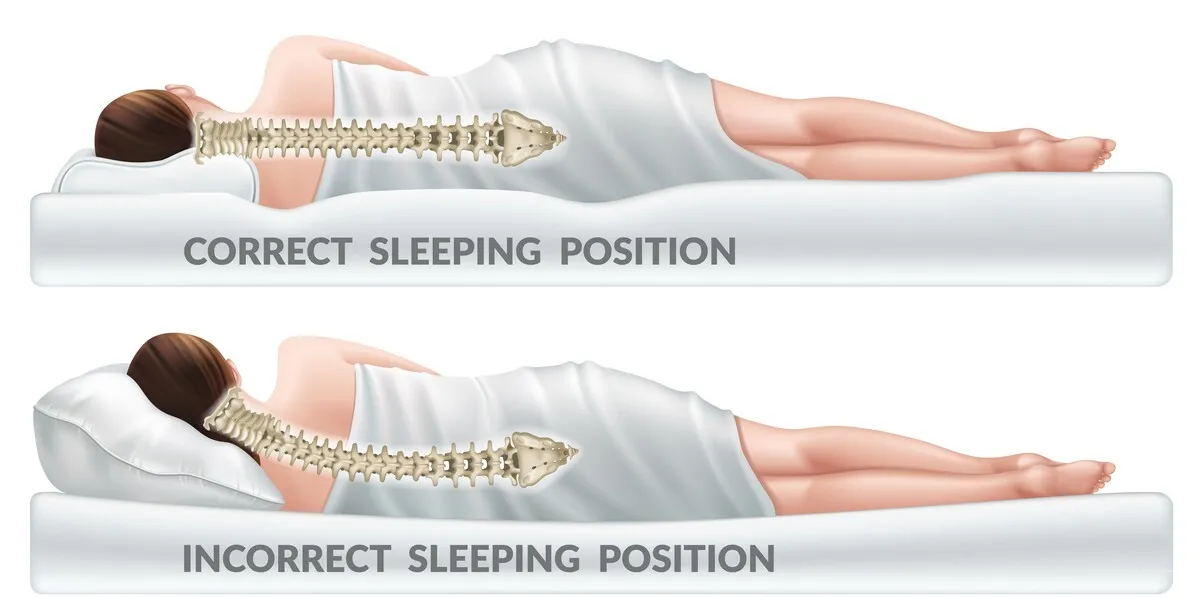
Side sleeping itself is not inherently bad — in fact, it can be one of the better options when done correctly. However, many side sleepers create problems through poor pillow choice or body alignment. If your pillow is too flat, your head drops downward, placing your cervical spine into a side-bent position for hours. If your pillow is too thick, your head is pushed up and away from your shoulder, creating the opposite problem. Either scenario can compress nerves in the neck and upper shoulder area.
Side sleeping with your bottom arm tucked beneath your pillow or extended awkwardly overhead is another common mistake Dr. Christine Stewart sees in her Fredericksburg, VA patients. This position can compress the brachial plexus — the network of nerves running through your neck and shoulder — leading to that familiar “dead arm” feeling in the morning, or more persistent tingling and numbness.
Curled Fetal Position with Excessive Spinal Flexion
Many side sleepers tuck their knees tightly to their chest in a fully curled fetal position. While a moderate knee-up position can reduce lumbar pressure, an extreme curl flexes the entire spine significantly. This sustained flexion can increase pressure on the spinal discs and, over time, may aggravate nerve compression in the lower back. It also tends to round the shoulders forward, which can tighten the muscles around the upper thoracic spine and contribute to nerve-related symptoms in the arms and hands.
Sleeping Without Proper Spinal Support
This isn’t a single “position” per se, but it’s worth mentioning: sleeping on a mattress that is too soft or too old — or without appropriate pillow support — can cause the entire spine to sag into misalignment regardless of the position you start in. When the spine loses its proper curvature during sleep, nerve roots throughout the cervical, thoracic, and lumbar regions can come under increased, sustained pressure.
Better Sleep Position Alternatives
The back-sleeping position — supine — is generally considered the most spine-friendly option for people prone to pinched nerves. When lying flat on your back, the spine maintains its natural curves more easily, weight is distributed evenly, and no single area is subjected to disproportionate pressure. Placing a supportive pillow under your knees when back sleeping can further reduce lumbar disc pressure and help the lower back relax into a comfortable, neutral position.
If back sleeping isn’t comfortable for you, a properly supported side-sleeping position is the next best option. The key is keeping your spine in a neutral, straight alignment. Use a pillow that fills the space between your ear and shoulder completely — neither too high nor too low. Placing a pillow between your knees is also a highly effective strategy for side sleepers, as it prevents the top hip from rotating forward and keeps the lumbar spine and pelvis better aligned throughout the night.
How Chiropractic Care Fits In
Chiropractic care takes a non-invasive, drug-free approach to addressing the underlying joint and spinal dysfunction that contributes to nerve compression. When spinal joints are misaligned or restricted in their movement — a condition chiropractors refer to as a subluxation — the surrounding nerves can become irritated or compressed. Chiropractic adjustments work to restore proper joint motion and alignment, reducing that mechanical pressure on the nervous system.
At Wilderness Family Chiropractic in Fredericksburg, VA, Dr. Christine Stewart performs a thorough evaluation that includes a detailed health history, postural assessment, and spinal examination before recommending any course of care. The goal is always to find the root cause of your nerve symptoms — not just temporarily mask the pain. Care plans are individualized, meaning what works for one patient’s cervical radiculopathy may differ significantly from what another patient with sciatic nerve irritation needs.
Evidence from organizations like the American College of Physicians and the National Center for Complementary and Integrative Health suggests that spinal manipulation is a reasonable conservative care option for certain types of neck pain and low back pain — which are the most common culprits behind pinched nerve symptoms. Chiropractic care is not a cure-all, but for many patients dealing with nerve compression from musculoskeletal sources, it can provide meaningful, lasting relief as part of a broader wellness approach.
Practical Tips for Protecting Your Nerves While You Sleep
Transitioning to a better sleep position takes time and intention — especially if you’ve been a stomach sleeper for decades. One approach that Dr. Christine Stewart often recommends to patients at Wilderness Family Chiropractic is using a body pillow. A full-length body pillow can help a stomach sleeper gradually transition to side sleeping by giving the body something to rest against, reducing the urge to roll forward onto the stomach.
Investing in the right pillow for your sleep position is equally important. Back sleepers generally do best with a medium-loft pillow that cradles the natural cervical curve without pushing the head too far forward. Side sleepers typically need a firmer, higher-loft pillow that fills the gap between the head and shoulder. Cervical support pillows — often contoured with a slight arch — are specifically designed to maintain healthy neck curvature and are worth exploring if you’re dealing with cervical nerve symptoms.
Your mattress matters, too. A mattress that no longer provides adequate support — usually indicated by visible sagging, spring noise, or waking up stiff every morning — may be contributing to your nerve problems more than you realize. A medium-firm mattress is generally recommended for most spine-related concerns, though individual needs vary.

When to See a Chiropractor
If you’ve been waking up with persistent pain, numbness, or tingling that doesn’t resolve within an hour or two of getting up, it’s worth scheduling a professional evaluation. Occasional morning stiffness is normal, but recurring nerve-type symptoms — especially those that radiate into the arms, hands, legs, or feet — deserve attention. The longer nerve compression goes unaddressed, the more difficult it can become to manage.
Certain symptoms require immediate medical attention and go beyond the scope of chiropractic care alone. These include sudden severe pain, loss of bladder or bowel control, significant weakness in the limbs, or symptoms following a traumatic injury. If you experience any of these, seek emergency medical care right away. For the vast majority of nerve compression symptoms that are musculoskeletal in origin and gradual in onset, chiropractic evaluation is a logical, conservative first step. Dr. Christine Stewart at Wilderness Family Chiropractic in Fredericksburg, VA welcomes patients who are looking for answers and a clear path forward.
Sleeping Position Comparison
Sleep Position | Nerve Risk Level | Primary Concern | Recommended Modification |
|---|---|---|---|
Stomach sleeping | High | Cervical rotation, lumbar flattening | Avoid; transition to side or back sleeping |
Side sleeping (poorly supported) | Moderate | Lateral cervical flexion, brachial plexus compression | Use proper pillow height; pillow between knees |
Extreme fetal position | Moderate | Sustained spinal flexion, disc pressure | Soften the curl; keep spine more neutral |
Back sleeping (supported) | Low | Minimal when properly supported | Pillow under knees; medium-loft neck pillow |
Side sleeping (properly supported) | Low to Moderate | Hip rotation if no knee pillow | Neutral pillow height; pillow between knees |
Myths vs. Facts About Sleeping and Pinched Nerves
Myth: A firm mattress is always best for nerve pain.
Fact: Mattress needs are individual. While a mattress that is too soft provides inadequate spinal support, an extremely firm mattress can create pressure points, particularly for side sleepers. Research generally supports medium-firm mattresses for spinal comfort, but the best mattress is one that keeps your spine in neutral alignment throughout the night without creating painful pressure points at the hips or shoulders.
Myth: If you wake up with numbness or tingling, it will always go away on its own.
Fact: Occasional positional tingling that resolves quickly is common and usually not a cause for alarm. However, recurring numbness or tingling — especially if it’s happening most mornings or persisting for extended periods — can indicate ongoing nerve irritation that warrants professional evaluation. Ignoring these signals and hoping they’ll resolve can sometimes allow the underlying problem to progress.
Myth: Chiropractic adjustments directly “fix” a pinched nerve.
Fact: Chiropractic care addresses the joint dysfunction and misalignment that can contribute to nerve compression. By restoring proper spinal mechanics, chiropractic adjustments may reduce the pressure on affected nerves — but they work by improving the musculoskeletal environment around the nerve, not by directly manipulating the nerve itself. It’s an important distinction, and one Dr. Christine Stewart takes care to explain to every patient.
Myth: You should never sleep on your side if you have a pinched nerve.
Fact: Side sleeping is not inherently harmful. With proper pillow support and knee positioning, side sleeping can actually be a comfortable and spine-supportive option for many people experiencing nerve-related symptoms. The position itself is less important than how well it is supported and maintained throughout the night.
Myth: Once you have a pinched nerve, surgery is inevitable.
Fact: The vast majority of nerve compression cases, particularly those that are musculoskeletal in origin, respond well to conservative care. Organizations like the American College of Physicians recommend non-invasive approaches — including spinal manipulation, exercise, and lifestyle modification — as first-line treatment for back and neck pain before considering surgical options. Surgery is typically reserved for severe cases that do not respond to conservative care over time.
Final Thoughts
Sleep is one of the most powerful recovery tools your body has — but only when it’s working in your favor. For those prone to pinched nerves, the hours you spend in bed each night can either support your healing or quietly work against it. Small, intentional changes to your sleep position, pillow setup, and mattress support can have a genuinely significant impact on how you feel each morning.
At Wilderness Family Chiropractic in Fredericksburg, VA, Dr. Christine Stewart and the care team are passionate about helping members of the local community take a proactive approach to their spinal and nerve health. Whether you’re dealing with recurring neck pain, radiating arm symptoms, sciatica, or simply waking up stiff and sore, there are real, practical steps you can take — and professional support available when you need it. You don’t have to keep waking up in pain and wondering why. Answers and a clear, conservative path forward are closer than you might think.
Frequently Asked Questions
Can the wrong sleep position actually cause a pinched nerve?
Yes, sustained poor positioning during sleep can contribute to nerve compression, particularly in the cervical and lumbar spine. While sleep position alone may not be the sole cause, it can certainly aggravate existing vulnerabilities or contribute to new irritation when maintained for hours night after night.
How long does it take to see improvement after changing sleep positions?
Many people notice some improvement in morning symptoms within a few weeks of consistently sleeping in a more supportive position. However, results vary depending on the severity of the underlying nerve irritation and whether other contributing factors — like daytime posture or spinal misalignment — are also being addressed.
Is it safe to see a chiropractor when I have a pinched nerve?
For most people with musculoskeletal-related nerve compression, chiropractic care is a safe, non-invasive option. Dr. Christine Stewart at Wilderness Family Chiropractic performs a thorough evaluation before recommending any care to ensure it is appropriate for your specific situation. Certain conditions may require medical co-management or referral.
What pillow is best for someone with a pinched nerve in the neck?
A contoured cervical support pillow is often recommended for those with cervical nerve symptoms, as it is designed to cradle the natural curve of the neck while sleeping. The right pillow also depends on your preferred sleep position — back sleepers generally need a lower-loft pillow than side sleepers. Speaking with a chiropractor can help you get a personalized recommendation.
Can stretching before bed help prevent pinched nerve symptoms at night?
Gentle, targeted stretching before bed may help relax muscles that could otherwise tighten and contribute to nerve compression during sleep. However, aggressive or improper stretching can irritate an already compressed nerve. It’s best to get guidance from a chiropractor or qualified healthcare provider on which stretches are appropriate for your specific situation.
Does sciatica get worse when sleeping in certain positions?
Yes, sciatica — caused by compression of the sciatic nerve — can be significantly influenced by sleep position. Stomach sleeping and sleeping without knee support tend to increase lumbar disc pressure, which can aggravate sciatic symptoms. Back sleeping with a pillow under the knees, or side sleeping with a pillow between the knees, is generally more comfortable for those with sciatica.
TL;DR Summary
-
Stomach sleeping is the most harmful position for those prone to pinched nerves, due to cervical rotation and lumbar flattening.
-
Side sleeping with poor pillow support or an awkwardly positioned arm can compress nerves in the neck and shoulder region.
-
Back sleeping with a pillow under the knees and properly supported side sleeping are generally the best options for nerve health.
-
Chiropractic care can help address the underlying spinal misalignment and joint dysfunction that contributes to nerve compression — without drugs or surgery.
-
If you’re waking up with persistent numbness, tingling, or radiating pain, it’s worth scheduling an evaluation with Dr. Christine Stewart at Wilderness Family Chiropractic in Fredericksburg, VA.