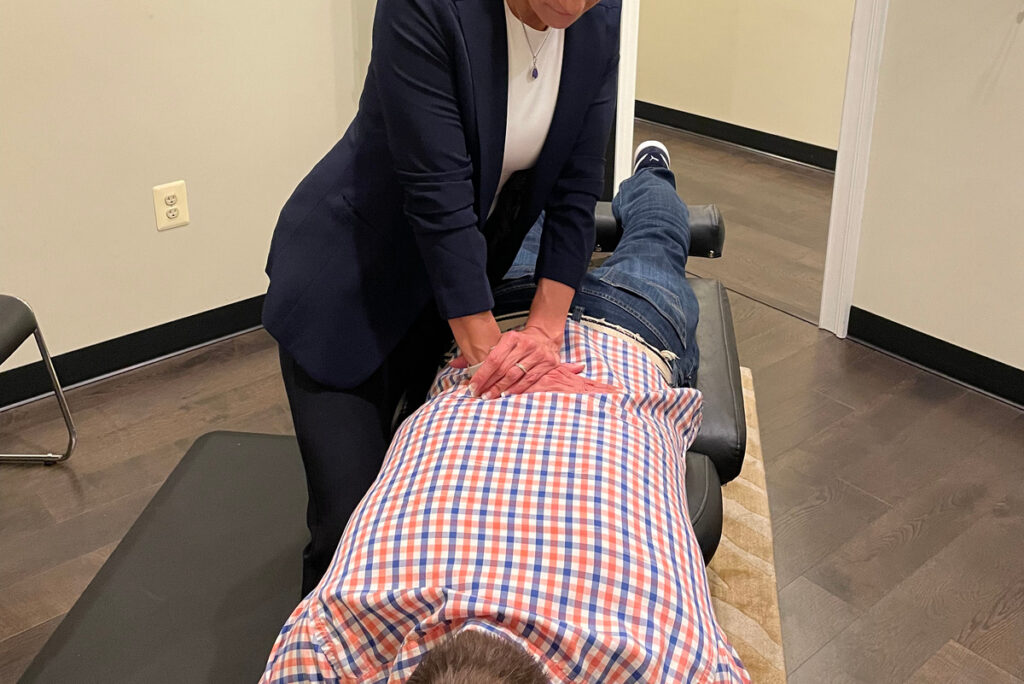


If you’ve ever felt a burning or aching pain on the outside of your elbow — especially after gripping, lifting, or using your arm repetitively — you already know how much it can slow you down. Tennis elbow is one of those conditions that starts subtly but can become truly disruptive to everyday life. Whether you’re shaking hands, turning a doorknob, or lifting a coffee mug, the pain reminds you it’s there. Here at Wilderness Family Chiropractic in Fredericksburg, VA, Dr. Christine Stewart works with patients dealing with exactly this kind of frustrating, persistent discomfort. The good news? You don’t have to just push through it or rely on pain medication. There are effective, natural approaches that can genuinely help — and understanding your condition is the first step.
What Is Tennis Elbow?
Tennis elbow — known medically as lateral epicondylitis — is an overuse injury involving the tendons that attach to the outer bony bump of your elbow. It causes pain and tenderness on the outside of the elbow that often radiates down the forearm. Despite the name, you absolutely do not have to play tennis to develop it.
What Is Tennis Elbow, Really?
Tennis elbow is a condition that develops when the tendons connecting your forearm muscles to the lateral epicondyle — the bony prominence on the outer side of your elbow — become overloaded and irritated. Over time, repetitive stress causes tiny tears in the tendon tissue, leading to inflammation, pain, and reduced grip strength.
The primary muscle group involved is the extensor carpi radialis brevis, which plays a key role in stabilizing the wrist during arm movements. When this muscle and its attached tendon are repeatedly strained without adequate recovery time, the tissue begins to break down. This degenerative process is sometimes referred to as tendinopathy rather than purely inflammation, which is why rest alone often isn’t enough to fully resolve it.
What surprises many people is just how common this condition is — and how many different activities can cause it. It affects people of all ages and backgrounds, from office workers and painters to carpenters and, yes, tennis players. At Wilderness Family Chiropractic, Dr. Christine Stewart sees patients from across the Fredericksburg community dealing with this condition, and the causes are as varied as the individuals themselves.
Common Causes of Tennis Elbow
As the name suggests, repetitive arm and wrist movements are at the heart of most tennis elbow cases. But the range of activities that can trigger it is broader than most people expect. Any task that requires repeated gripping, twisting, or extending the wrist can gradually overload the tendons at the elbow.
Occupational activities are a significant contributor. Plumbers, electricians, painters, and carpenters frequently develop tennis elbow because their work involves sustained gripping and repetitive forearm rotation. Similarly, people who spend long hours typing at a desk — especially with poor wrist positioning — may develop the same pattern of strain over time. Here in Fredericksburg, VA, many patients who work in trades, office settings, or even home improvement find themselves dealing with this exact problem.
Sports and recreational activities also play a role. Tennis players, especially those with improper backhand technique, put significant stress on the forearm extensors. But golfers, racquetball players, and even weightlifters can develop similar patterns of overuse. In some cases, a single sudden effort — like lifting something unexpectedly heavy — can be the final straw after a period of accumulated stress on the tendon.
Age is another contributing factor. Tendons naturally become less resilient and more susceptible to micro-tearing as we get older. Most cases occur in people between the ages of 30 and 50, though it is certainly not exclusive to that range.
Signs and Symptoms to Watch For
Tennis elbow has a fairly recognizable presentation, but its symptoms can be easy to dismiss early on — especially since the pain often starts mild. Knowing what to watch for can help you seek care before the condition becomes more serious.
The hallmark sign is pain and tenderness on the outer side of the elbow, specifically over or just below the lateral epicondyle. This pain often worsens when you grip an object, turn a wrench, open a jar, or shake someone’s hand firmly. Many people also notice that the pain radiates down the forearm toward the wrist, which can sometimes be mistaken for a wrist problem.
Weakness in the hand and forearm is another common complaint. You might find that your grip feels unreliable or that lifting even lightweight objects — like a coffee cup or a book — produces a sharp or aching sensation. Morning stiffness around the elbow and forearm is also frequently reported, especially after a night’s rest following a day of repetitive activity.
In more advanced cases, the pain can become present even at rest. If you’re reaching that point, it’s a strong signal that your body needs professional attention rather than simply “toughing it out.” Dr. Christine Stewart at Wilderness Family Chiropractic in Fredericksburg, VA, evaluates these symptoms carefully to identify not just the local tissue irritation, but any contributing factors in the wrist, shoulder, neck, or upper back that may be making things worse.

How Chiropractic Care Can Help
When most people think of chiropractic care, they picture spinal adjustments for back and neck pain. But chiropractic is fundamentally about the relationship between the musculoskeletal system and overall function — and that applies just as much to the elbow, wrist, and forearm as it does to the spine. Tennis elbow is a condition that responds well to a conservative, whole-body approach, and chiropractic care fits that description perfectly.
One of the first things Dr. Christine Stewart assesses is whether there is joint dysfunction in the elbow or wrist itself. When the small joints of the elbow or wrist are not moving properly, they can alter the load distribution through the surrounding tendons and muscles. Gentle mobilization or manipulation of these joints can restore proper movement mechanics, reduce irritation, and support the healing process.
Equally important is evaluating the cervical spine and upper back. Research suggests that nerve irritation in the neck — particularly at the C5-C6 or C6-C7 levels — can sometimes contribute to or mimic elbow pain. By addressing any underlying spinal dysfunction, chiropractic care helps ensure that the nerves supplying the arm are functioning optimally, which supports both recovery and long-term prevention.
Soft tissue techniques are another valuable tool. These may include myofascial release, Shockwave therapy, instrument-assisted soft tissue mobilization, or therapeutic stretching aimed at reducing tension in the forearm extensor muscles. These approaches help break down scar tissue, restore normal tissue quality, and reduce the chronic irritation that prevents full healing.
At Wilderness Family Chiropractic, care is always individualized. No two cases of tennis elbow are exactly alike, and Dr. Christine Stewart takes the time to understand each patient’s specific activity demands, posture habits, and contributing factors before building a care plan. The goal is not just to reduce pain temporarily, but to address the root causes so that the problem doesn’t keep coming back.
Practical Tips for Recovery and Prevention
While professional care is important for a full recovery from tennis elbow, there are meaningful steps you can take on your own to support healing and reduce your risk of re-injury. These aren’t shortcuts — they’re smart habits that complement the work done in the clinic.
One of the most important things you can do is modify the activities that are aggravating your symptoms. This doesn’t necessarily mean stopping everything, but it does mean reducing repetitive gripping, lifting, or wrist extension until the tendon has had a chance to recover. Continuing to push through significant pain typically makes the condition worse over time.
Ergonomic adjustments can make a real difference, particularly for people whose work involves prolonged computer use or manual tasks. Keeping your wrist in a neutral position while typing, using a mouse pad with wrist support, and taking regular movement breaks throughout the day can reduce the cumulative strain on your forearm extensors.
Gentle stretching of the forearm extensors — performed carefully and without forcing through pain — can help maintain flexibility and reduce tension in the tendon. A common stretch involves extending your arm in front of you, gently bending your wrist downward with your opposite hand, and holding for 20-30 seconds. Always check with Dr. Christine Stewart or your care provider before starting any new stretching routine to make sure it’s appropriate for your specific situation.
Grip strength training, when introduced gradually and at the right stage of recovery, can help rebuild tendon resilience. Strengthening the surrounding muscles reduces the load placed on the damaged tendon during everyday activities. Patience is key here — progressive loading should only begin once acute symptoms have settled.
When to See a Chiropractor
Many people wait too long before seeking care for tennis elbow, hoping it will resolve on its own. While mild cases sometimes improve with rest and activity modification, moderate to persistent cases tend to worsen without targeted treatment. If your elbow pain has lasted more than two to four weeks, is interfering with your daily activities, or keeps returning after periods of rest, it’s time to have it professionally evaluated.
There are also certain red flags that warrant prompt medical attention rather than — or in addition to — chiropractic care. These include severe swelling or bruising around the elbow, sudden loss of function, sharp pain at rest that is getting progressively worse, or any neurological symptoms such as numbness, tingling, or weakness that extends significantly down the arm. These signs may indicate a more serious injury, such as a ligament tear or nerve entrapment, that requires further diagnostic workup.
For the majority of tennis elbow cases, however, chiropractic care represents an excellent first step in conservative management. At Wilderness Family Chiropractic in Fredericksburg, VA, Dr. Christine Stewart is experienced in evaluating these injuries thoroughly and will refer out when necessary to ensure every patient receives the most appropriate level of care.
Tennis Elbow: Symptoms vs. Common Triggers
Symptom |
Common Activity Trigger |
What It Means |
|---|---|---|
|
Pain on the outer elbow |
Gripping tools, racquets, or steering wheels |
Tendon stress at the lateral epicondyle |
|
Forearm aching or burning |
Repetitive wrist extension (typing, painting) |
Overuse of extensor muscle group |
|
Weak grip strength |
Lifting objects, opening jars |
Tendon micro-tearing reducing force output |
|
Morning stiffness |
Following a day of prolonged hand use |
Inflammation and tissue tension overnight |
|
Pain radiating toward the wrist |
Sustained forearm muscle contraction |
Referred pain along the extensor muscle chain |
Myths vs. Facts About Tennis Elbow
Myth: You Have to Play Tennis to Get Tennis Elbow
Fact: Tennis elbow got its name because it’s common in tennis players due to repetitive backhand strokes, but the majority of people who develop this condition have never picked up a racquet. Painters, plumbers, office workers, cooks, and many others develop it due to occupational or recreational overuse. The underlying mechanism — repetitive strain on the forearm extensors — can come from countless activities.
Myth: Rest Alone Will Fix It
Fact: While rest is an important part of recovery, it’s rarely sufficient on its own, especially for cases that have progressed beyond the early stages. Tennis elbow involves a degenerative process in the tendon tissue, not just acute inflammation. Without addressing the underlying movement dysfunction, muscle imbalances, and biomechanical factors, many people find that the pain returns as soon as they resume normal activity.
Myth: Chiropractic Care Only Treats the Spine
Fact: Chiropractic care encompasses the entire musculoskeletal system, including the joints, muscles, and tendons of the arms and legs. Chiropractors are trained to evaluate and treat extremity conditions like tennis elbow. Joint mobilization, soft tissue therapy, and exercise rehabilitation are all within the scope of chiropractic practice and can be highly effective for this condition.
Myth: If It Doesn’t Hurt That Badly, It’s Not Serious
Fact: Tennis elbow often starts as a mild, intermittent discomfort that people tend to dismiss. However, if the underlying tendon damage is not addressed, what begins as minor irritation can progress into chronic tendinopathy that takes significantly longer to heal. Early evaluation and conservative care generally lead to faster, more complete recovery than waiting until the pain becomes severe.
Myth: Surgery Is Usually Necessary
Fact: The overwhelming majority of tennis elbow cases resolve with conservative, non-surgical care. Evidence from clinical guidelines, including those from organizations like the American College of Physicians, consistently supports conservative management — including manual therapy, exercise rehabilitation, and activity modification — as the first-line approach. Surgery is typically only considered after extended conservative treatment has been exhausted.
Final Thoughts from Wilderness Family Chiropractic
Tennis elbow is a frustrating condition, but it is absolutely manageable — and for most people, fully recoverable — with the right approach. The key is not to ignore it, not to push through worsening pain, and not to assume that time alone will take care of it. Understanding what’s happening in your body is empowering, and seeking professional care early gives you the best chance at a complete recovery.
Here at Wilderness Family Chiropractic in Fredericksburg, VA, Dr. Christine Stewart is passionate about helping members of our community get back to doing the things they love without pain holding them back. Whether you’re a weekend athlete, a dedicated tradesperson, or someone who just can’t figure out why their elbow has been bothering them for months — you deserve a thorough evaluation and a care plan that actually addresses the root of the problem.
We take pride in being a resource for the Fredericksburg community, and we believe that informed patients make the best decisions for their health. If anything in this article resonates with what you’ve been experiencing, we’d love the opportunity to help. You don’t have to keep living with that nagging elbow pain.
Frequently Asked Questions About Tennis Elbow
How long does tennis elbow typically take to heal?
Recovery time varies depending on how long the condition has been present and how consistently treatment is pursued. Mild cases may improve within a few weeks, while more chronic or advanced cases can take several months to fully resolve. Early intervention and addressing the underlying causes generally leads to faster recovery.
Can tennis elbow go away on its own?
Very mild, early-stage cases may improve with rest and activity modification. However, moderate or persistent cases often do not fully resolve without targeted treatment. Waiting too long can allow the tendon damage to progress, making recovery more difficult and prolonged.
Is it okay to exercise with tennis elbow?
Gentle, guided exercise can actually support recovery from tennis elbow when introduced at the appropriate stage. However, activities that aggravate symptoms should be modified or avoided during the acute phase. It’s important to consult with a healthcare provider before beginning any exercise program while managing this condition.
Can poor posture contribute to tennis elbow?
Yes — poor upper body posture, particularly rounded shoulders or forward head positioning, can alter the mechanics of the entire arm and increase strain on the forearm tendons. Addressing postural habits is often an important part of a comprehensive tennis elbow treatment plan.
Does chiropractic care for tennis elbow involve adjusting the elbow?
Chiropractic care for tennis elbow may involve gentle joint mobilization of the elbow and wrist, soft tissue techniques, and spinal assessment to address any nerve-related contributors. The approach is always gentle and tailored to the individual’s comfort level and clinical needs. Dr. Christine Stewart evaluates each patient thoroughly before deciding on the most appropriate techniques.
Should I use ice or heat on my tennis elbow?
Ice is generally recommended during the acute or flare-up phase to help manage pain and reduce local irritation, while heat may be more appropriate during the recovery phase to support circulation and tissue flexibility. It’s best to follow the specific guidance of your chiropractor or healthcare provider based on where you are in the healing process.
TL;DR — Key Takeaways
-
Tennis elbow (lateral epicondylitis) is a tendon overuse injury on the outer elbow that affects far more than just tennis players — it’s common in anyone who performs repetitive gripping or wrist extension movements.
-
Symptoms include outer elbow pain, forearm aching, reduced grip strength, and morning stiffness that worsens with activity.
-
Chiropractic care — including joint mobilization, soft tissue therapy, and spinal assessment — offers a drug-free, non-surgical approach to addressing the root causes of tennis elbow.
-
Rest alone is rarely enough; activity modification, ergonomic adjustments, and guided rehabilitation are essential components of a full recovery.
-
If your elbow pain has persisted for more than a few weeks or is interfering with daily life, it’s worth having it evaluated by Dr. Christine Stewart at Wilderness Family Chiropractic in Fredericksburg, VA.